
YOUR PRIVACY
To enhance your experience with our site, many of our web pages use “cookies” and shopper ID’s. Cookies are text files we place in your computer’s web browser to store your preferences. To find out more, read our updated privacy policy.
Teen Pregnancy FAQ
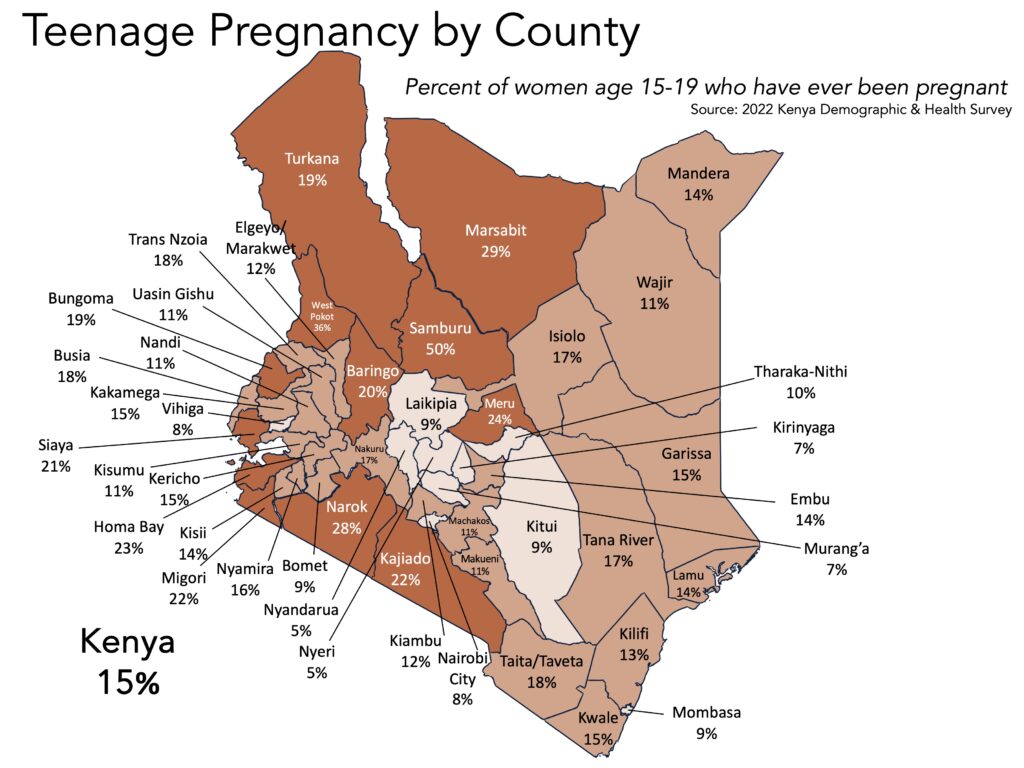
Teen pregnancy can be a difficult topic to broach — which is part of the reason it’s so rampant. In the communities we serve, more than 1 in 4 adolescent girls has had a pregnancy. To help explain why, here are some answers to our most frequently asked questions:
1. Why is teenage pregnancy so prevalent in the communities you serve?
In rural Maasai communities like the ones we serve, sexual activity often begins early — especially for girls. According to one survey, the average Maasai child begins engaging in sexual activity at age 10, compared to Kenya’s national average of 16. A key driver of this earlier sexual activity is child marriage. It is a common traditional practice amongst the Maasai, affecting 50% of girls in the communities we serve. When girls are married off at a young age, their sexual debut also occurs earlier. Traditions like these, combined with the inaccessibility of modern contraceptives, and lack of sexual and reproductive health education make adolescent girls in the communities we serve extremely vulnerable to early/teen pregnancies.
2. What is survival sex?
Survival sex refers to transactional sex in exchange for money or basic necessities like food, shelter, and menstrual hygiene products. It is a common coping mechanism for women and girls living in extreme poverty and/or during times of crisis, such as the COVID-19 pandemic and Kenya’s recent climate crises. With our region’s inadequate contraceptive access and lack of sexual and reproductive health education, widespread survival sex creates higher rates of teen pregnancy. It also exposes girls to physical and sexual violence.
3. Why is contraceptive use so low in the communities you serve?
In our area, only 52% of married girls and women use modern contraceptives. This is due in large part to a lack of education and knowledge surrounding reproductive health (for example, less than 40% of Kenyan women have accurate knowledge of their ovulatory cycles).
Severe social stigma is another contributing factor to low contraceptive use. Studies have found that judgmental or negative attitudes of health workers are a major barrier to seeking sexual and reproductive healthcare, particularly among adolescents. This is one reason why opening our own youth-friendly health clinic was so critical. Core to our clinic’s mission is providing compassionate, discreet, and stigma-free care to adolescents.
Negative myths and misconceptions about family planning are fairly prevalent in the communities we serve, which also contribute to low contraceptive use. Some of these misconceptions about contraception include that it can cause serious adverse health effects, infertility, and birth defects, which is why educational health programs like ours are important. They dispel these myths and misconceptions about modern contraceptives, help people make informed decisions about their health, and increase safe sex practices and responsible contraceptive use.
Lastly, contraceptive use is low because contraception is also not easily accessible in our remote community. By one estimate, fulfilling unmet needs for modern contraceptives among Kenyan adolescents would decrease unintended pregnancies by 73%.
4. What are the health consequences of teenage pregnancy?
Globally, complications arising from pregnancy and childbirth are the leading cause of death for girls aged 15-19. Girls this age are twice as likely to die during childbirth as women 20 and older, as younger girls face higher risks of conditions like eclampsia, puerperal endometritis, and systemic infections during pregnancy. Adolescent mothers also face serious mental health consequences, as hormonal changes, stress, and social stigma during pregnancy are linked to mental health problems like depression and anxiety.
Girls aren’t the only ones at risk: babies born to adolescent mothers face higher rates of infant mortality and are more likely to develop chronic medical conditions and behavioral problems.
5. What is the typical outcome in life for teens who do become pregnant in the communities you serve?
In many Kenyan schools, students are suspended immediately once they become pregnant. Per national guidelines, they must also wait a minimum of six months after giving birth to return to school. During this extended time at home, girls not only fall behind in their studies, but also face stigma surrounding unwed pregnancy and greater pressure to marry. The pervasive expectation that girls and women stay home and raise children, combined with the financial burden of childcare, prevents many new mothers from ever completing their education. In turn, this limits their opportunities for economic empowerment and financial independence, often trapping them in a lifetime of poverty.
6. How does Kakenya’s Dream address teen pregnancy?
Kakenya’s Dream takes a holistic, rights-based approach to preventing teen pregnancy and supporting girls’ health and wellbeing. We believe every adolescent has the right to accurate information about their body, compassionate healthcare, bodily autonomy, and the opportunity to make informed decisions about their future.
Through the Kakenya Health and Wellness Center, adolescents and other community members access compassionate, stigma-free sexual and reproductive health services, alongside primary and preventive care, mental health counseling, pharmacy services, and lab testing. We also bring care and information closer to remote areas through mobile pop-up clinics and outreach programs, and work alongside the Ministry of Health to strengthen services at other local facilities.
Because teen pregnancy is shaped by more than access to healthcare alone, we also address the social pressures, practices, and misinformation that put girls at risk. Our health and human rights program educates boys and girls about sexual and reproductive health, gender equality, legal rights, prevention of FGM and child marriage, self-defense, and life skills. Community-led dialogues with parents, youth, elders, and local leaders—and complimentary educational radio and television programming—create space to discuss topics often shrouded in silence, including contraception, teen pregnancy, FGM, child marriage, and gender-based violence.
By combining direct healthcare services, education, and community-wide social norms change efforts, our goal is to prevent unintended pregnancies while creating the conditions girls need to remain in school, avoid child marriage and FGM, and pursue their goals.